CJID’s MDC2025 Illuminates Africa’s Path for Democracy, Development, and Digital Innovation

By Vivian Daniel
The Centre for Journalism Innovation and Development (CJID) successfully convened its 2025 Media Development Conference (MDC2025), bringing together journalists, policymakers, civil society actors, and international partners to explore Africa’s democratic, developmental, and technological trajectories. The three-day event, hosted in Abuja from 24 – 26 November, emphasised the theme: “Reimagining Democracy, Development, and Data for the Next Decade.”
Democracy on the Line
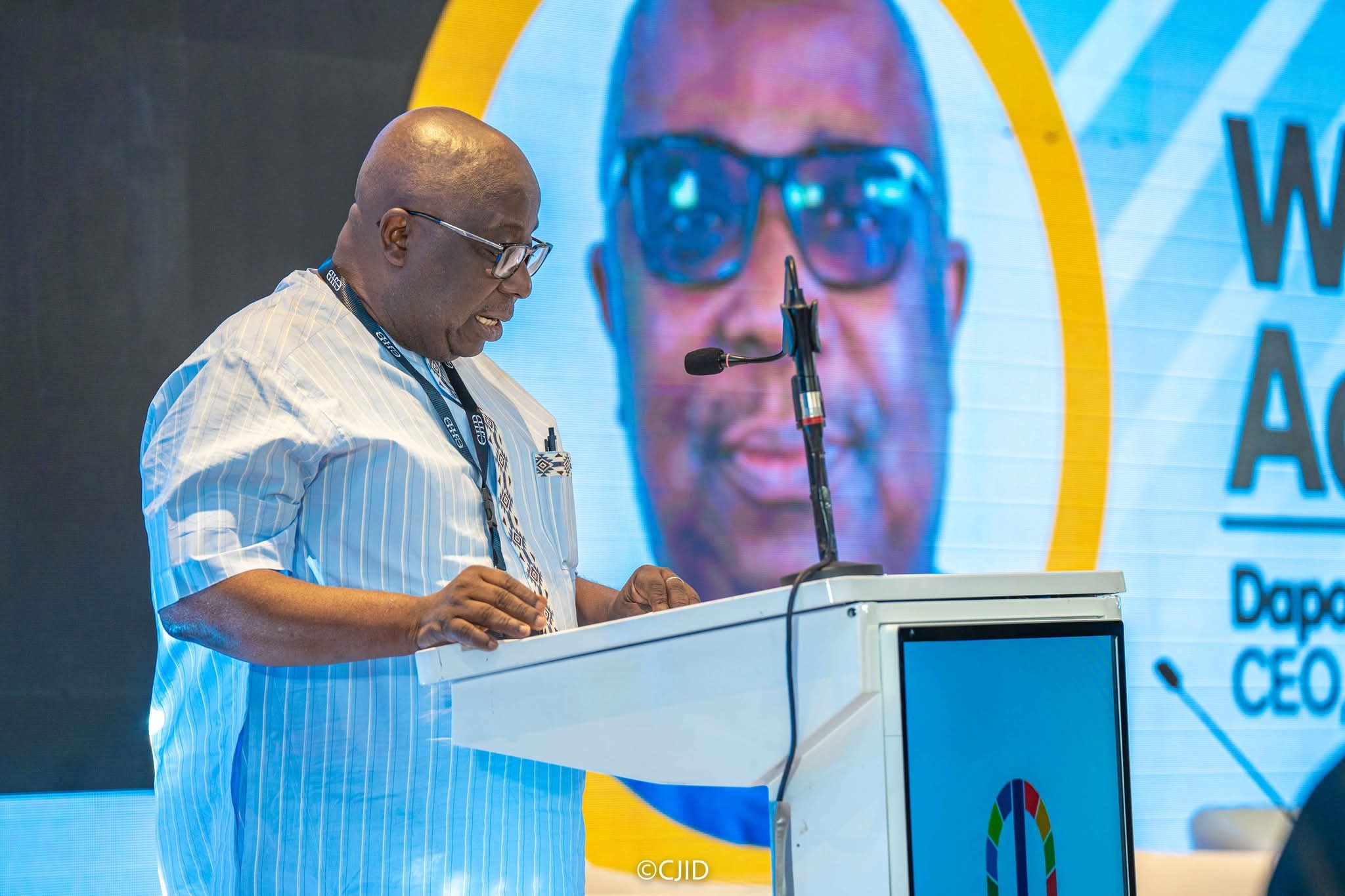
In his opening address, the CJID CEO, Dapo Olorunyomi, set the day’s tone, reflecting on the unsettling fragility that continues to shape democracies across Africa. “Across the continent, deep civic anxieties are rising. Citizens navigate shrinking civic space, declining trust in public institutions, and contested legitimacy,” he said.
Olorunyomi warned against treating democracy as merely a cycle of elections. “Democracy is a system of values, of participation, and of social contracts renewed through trust. Reimagining democracy for the next decade means building institutions that listen, designing governance that learns, and cultivating political cultures grounded in transparency, accountability, and citizen empowerment,” he said.
He further highlighted the democratic setbacks confronting the continent — from coups and constitutional manipulations that erode public trust, to young people feeling shut out of political processes, and civic spaces shrinking in ways that weaken genuine grassroots participation.
A Pan-African Vision for Media and Policy
The CJID’s Communications Manager, Hilary Nwoziri, emphasised the expanding reach and impact of the CJID’s conference.
“Over the years, we’ve seen how the conference itself has expanded. We’re now a much more pan-African conference, with bilingual features. The conversations here are shaping policies, whether on climate, development, or press freedom,” Nwoziri said.
Monsur Hussain, CJID’s Innovation Lead, highlighted the transformative role of technology in shaping media development.
“What stands out for me is the AI Summit, which allows people to understand the role technology is playing locally and internationally.”
Media: The Lifeline of Democracy
Olorunyomi emphasised the central role of independent media. “Advertising revenues are collapsing; donor support is thinning; new forms of censorship threaten press freedom. Yet, the demand for trustworthy information has never been higher,” he said.
He outlined a vision for revitalised media ecosystems: innovative business models that protect editorial independence, AI-powered fact-checking and civic literacy programmes, as well as a new generation of journalists trained in data, accountability, and digital safety.
“The media is not a luxury – it is the oxygen of democracy. If we allow it to weaken, all other reforms will collapse,” he cautioned.
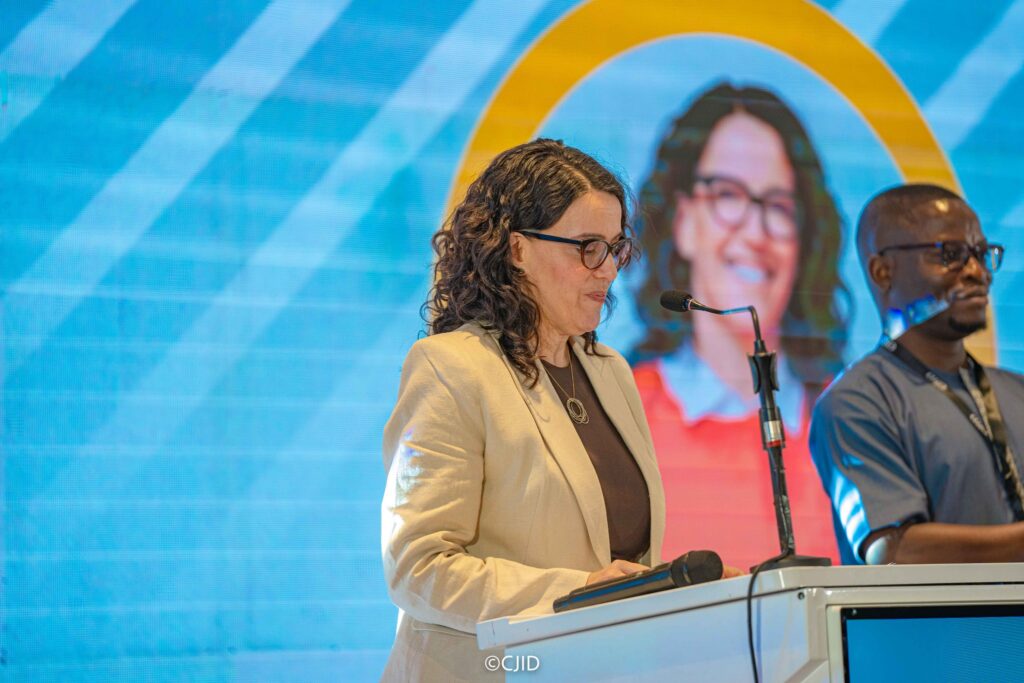
Vice President and Chief Programmes Officer, Luminate Global, Juana Kweitel.
Technology: Opportunity and Unequal Power
On the other hand, Juana Kweitel, Vice President and Chief Programmes Officer at Luminate Global, offered a complementary perspective, highlighting the promise and perils of digital technology.
“Technology has opened a world of possibilities. It has created economic opportunities, led to innovations in health and education, and increased civic and political participation,” she noted.
But she warned of the digital world’s darker side. Algorithms designed for engagement over truth, online harassment, and AI biases reflect the interests of a wealthy Global North. “These erase entire systems of understanding, contexts, and realities and deepen global inequalities,” Kweitel noted.
She equally noted the Digital Divide that nearly 90% of the women worldwide report online abuse affecting their participation, African youth in the gig economy face low wages and precarious work conditions, and AI systems often mirror the perspectives of dominant Global North actors.
Africa’s Digital Sovereignty
The CJID’s CEO highlighted the dangers of data colonialism, where global tech companies extract personal data for profit and political influence. “A continent historically subjected to the extraction of land, labour, minerals, and culture cannot afford a new era in which its data becomes the next frontier of exploitation,” he warned.
He pointed to lessons from Asia and Latin America: India’s Aadhaar system, South Korea’s e-governance platforms, Indonesia’s Mafindo fact-checking consortium, and Brazil’s Marco Civil da Internet show that strong digital governance is possible.
Kweitel added that Africa is at a critical moment to anchor technology in equity, rights, and justice. “We see an opportunity and a responsibility to help re-imagine tech governance across Africa,” she said. “African voices must be heard in global spaces, and digital spaces must be safe, inclusive, and empowering.”
Global Perspectives and Goodwill Messages
International delegates underscored Africa’s opportunity to shape its own narratives, the vital role of journalists in safeguarding democracy, and the urgency of balancing technological advancement with democratic and human-rights protections.
Canada’s High Commissioner to Nigeria, His Excellency Pasquale Salvaggio, noted:
“Resilient information ecosystems are at the backbone of strong democracies, where citizens can access trustworthy data, journalists can work freely, and governments are accountable.”
The Ambassador, Embassy of Spain in Nigeria, H.E. Félix Costale Artieda, said, “Artificial Intelligence is the biggest opportunity and also one of the biggest challenges the world has ever faced.”
The Ambassador of the Royal Norwegian Embassy in Nigeria, H.E. Svein Baera, noted, “To everyone participating today, I encourage you to keep collaborating, keep pushing boundaries…”
The Ambassador of the Kingdom of the Netherlands, H.E. Bengt van Loosdrecht, ably represented by Jessica Odudu, Project and Communications Officer, said, “The strength of any government is tied to the strength of its media ecosystem. As technology evolves, we must balance freedom of expression with the protection of digital rights and personal safety. Safeguarding democracy is a joint work/effort of all the stakeholders involved. The well-being of journalists must remain a reality so that our civic space is not threatened.”
The Project Manager, Open Climate Reporting Initiative (OCRI), Centre for Investigative Journalism, London, Adeolu Adekola, said, “Africa is at a juncture where it must own its own conversations and chart its way forward to the future it desires. “
The Country Manager, Nigeria Resource Governance Institute (NRGI), Tengi George-Ikoli, stressed, “In this era of misinformation and disinformation, journalists have a critical role to play in disseminating fact-based information.”
The National President of the Nigeria Union of Journalists (NUJ), Alhassan Yahaya, lauded the CJID for the success of MDC 2025.
He remarked, “I commend CJID for creating a platform that brings together stakeholders, journalists, and key actors to deliberate on pressing issues affecting our profession. The depth and relevance of the topics discussed have been outstanding.
“But beyond this, it is imperative that journalists take the lead in setting the agenda, like sensitising, educating, and enlightening the public about the work we do. Today, the credibility of our profession is under scrutiny, with trust in news declining daily. It is high time we reclaim our reputation, and that requires clear, strategic planning.
“Our strategy must prioritise a professional environment where journalists are properly remunerated, and the industry is strengthened from within. We cannot demand recognition externally without first ensuring internal standards are upheld. Research shows that less than 1% of journalists in Nigeria have access to any form of insurance, a stark reflection of our need for reform.
“To address this, the NUJ will introduce a comprehensive insurance scheme for journalists, covering both life and health. Life insurance will ensure families are protected, while health insurance safeguards the well-being of journalists themselves.”
Other dignitaries who gave their goodwill messages include H.E. Pieter LEENKNEGT, Ambassador, Embassy of the Kingdom of Belgium in Nigeria; Dr Jean-Paul NGOME ABIAGA, Head of Office and Representative, UNESCO office, Abuja; H.E. Amadou Coulibaly, Minister of Communication and Government Spokesperson of Côte d’Ivoire; President, Association of Communication Scholars & Professionals, Prof. Rotimi Olatunji, among others.
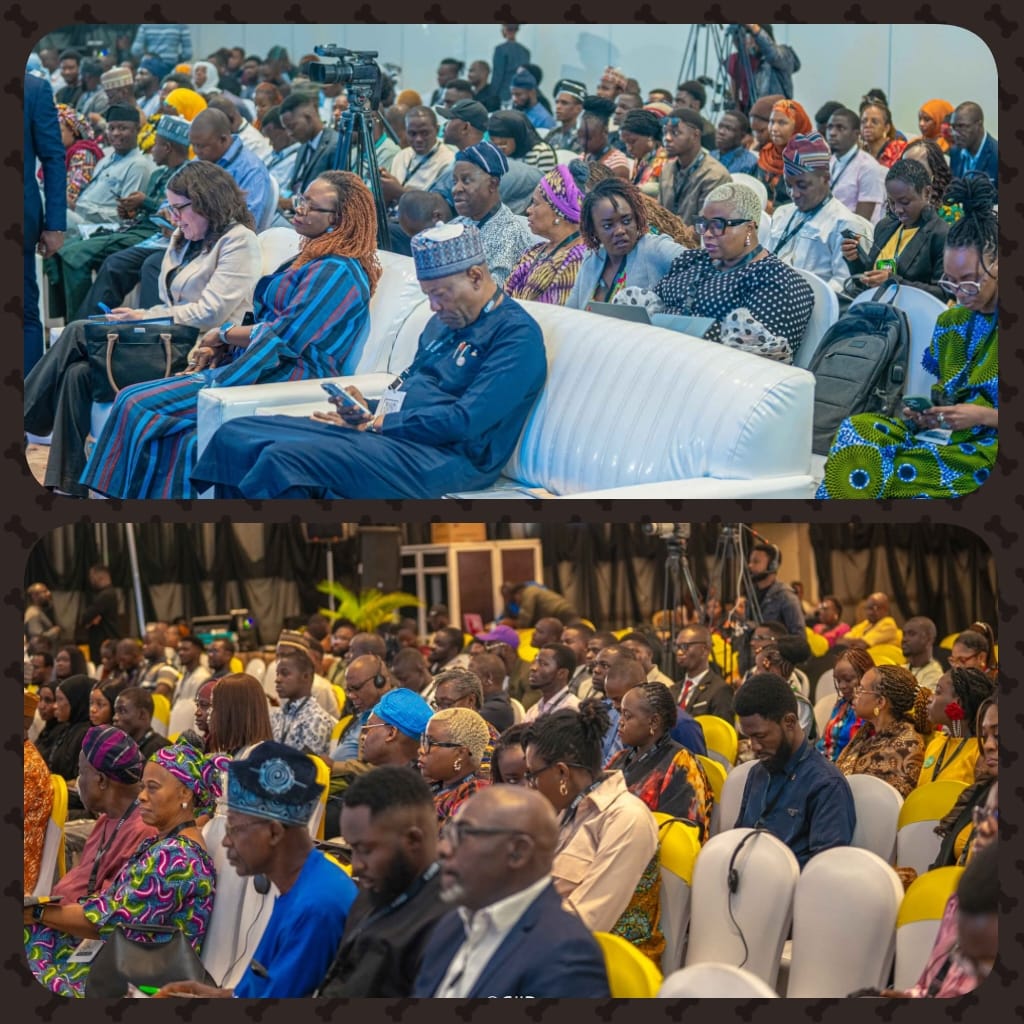
A Cross Section of Some Participants at the MDC2025
Youth, Innovation, and Civic Action
Both speakers stressed the role of youth. Olorunyomi celebrated CJID’s Campus Reporter programme, which is active in 34 Nigerian universities and expanding across 13 African countries. “Technology is not merely a tool; it is the terrain on which your future will be negotiated,” he said, whilst urging young innovators to seize the opportunities in fintech, agritech, health-tech, and civic-tech.
Kweitel highlighted that collaboration is key. “Journalists must hold truth to power and diversity of voices; civil society must integrate tech governance into its agenda; whilst philanthropy must fund the long game – donors or funders should strive to invest in sustainable ecosystems, not just projects. The next decade will decide whether our democracies are defined by disinformation and division, or by dialogue and dignity.”
Spotlight on Panel Discussions: Corruption, Capital Flows, and Climate Accountability
Sessions explored the extractive sector’s governance challenges, stressing the need for transparency, regulatory strength, and ensuring citizens’ benefit from natural resource wealth.
“One of the biggest opportunities we’re missing is the transition minerals in our countries,” said Mike Terungwa, Executive Director, GIFSEP.
“If we really want to reduce global emissions, we have to look at the top contributing countries,” added Adeolu Adekola, OCRI.
In climate discussions, participants urged actionable frameworks to translate high-level commitments into tangible outcomes, emphasising youth involvement in environmental solutions.
Women, Governance, and Inclusion
Panelists reflected on women’s participation in politics and elections, highlighting persistent inequalities:
“Women must be in the rooms where decisions affecting them are being made,” stated Hon. Akin Rotimi, Chairman, House Committee on Media and Public Affairs.
“It is important that we have women with the lived experiences of being girls, women, mothers, and primary caregivers at decision-making tables,” emphasised Osasu Igbinedion, The Reserved Seats for Women Bill Campaign Coalition.
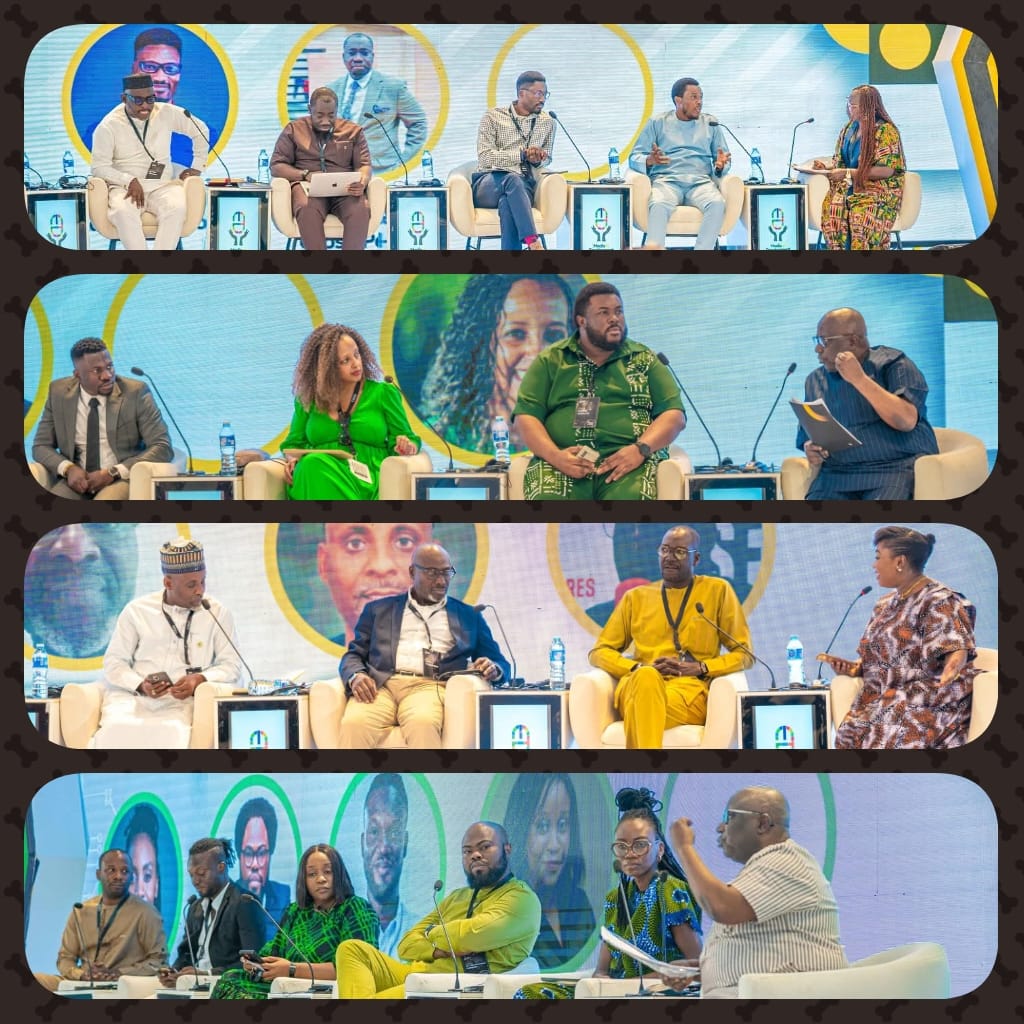
Some Panel Sessions at the MDC2025 and AI Summit
The CJID’s 2025 AI Summit: Harnessing Digital Innovation and AI
The ED, CJID, Akintunde Babatunde during his opening remarks noted that the “CJID has worked and trained 50 journalists from 27 news organisations, and retained 30 of them as AI Fellows, who, over the course of the months, have been publishing AI-related articles, insightful analysis to look at AI and all of those, and today we are very happy to have all our AI reporting fellows in the room. We’ve also been working with the civil society organisations, and we have 33 of them who are now developing advocacy issues, strategies and engagements to take on Artificial Intelligence issues in the country.”
While declaring the AI Summit open, Toyin Akinniyi, Vice President (Africa) at Luminate, reflected on AI’s intersection with democracy:
“Democracy thrives when citizens have access to trusted information. Reimagining democracy for the next decade means building AI governance systems that safeguard civic space while unlocking innovations that enhance democratic participation.”
Experts explored the transformative role of technology in agriculture, journalism, and civic engagement. Sessions addressed digital literacy, AI governance, and ethical frameworks for fair compensation in AI development.
“We have trained large language models to mimic our way of speaking so precisely that when we write, we are sometimes accused of using AI,” noted Chioma Agwuebo, TechHerNG.
“We need to invest in the businesses, the young people, and the places where innovation is happening,” added Kwabena Offei-Kwadey, Quantum LC Company Limited.
The AI Summit equally showcased homegrown innovations, including tools like Dubawa Chatbot, ChatJourno, and Spark AI, highlighting Nigeria’s emerging role in ethical AI development and digital sovereignty.
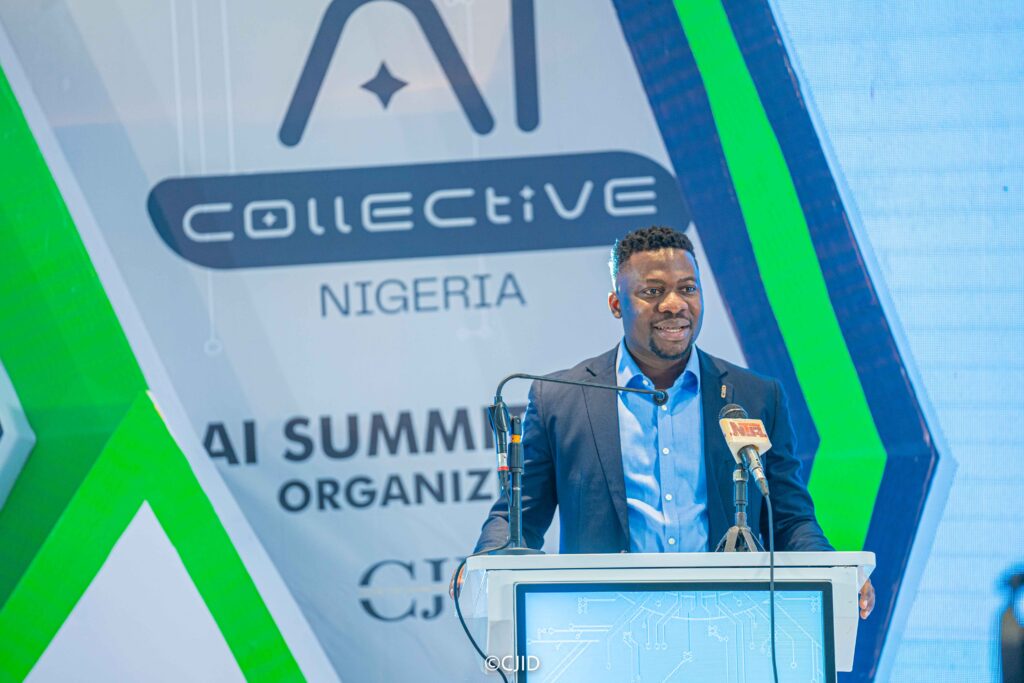
The Executive Director, CJID, Akintunde Babatunde, during his welcome speech at the AI Summit
Digital Sovereignty and Media Sustainability
Speakers discussed Africa’s need to reclaim its digital space and ensure technology benefits its citizens:
“Access to information is power and social media bans test who truly holds it,” noted Toyosi Akerele-Ogunsiji, Rise Network.
“Whoever controls the data controls the direction and value of AI,” added Oluwaseun Adepoju, CCHUB.
Panelists also explored sustainable journalism in the digital era while emphasising audience-centric content and distribution strategies.
“Most Africans understand the need to tell our stories, whether told by young people, women, or rural communities,” highlighted Hewete Haileselassie, Bird Story Agency.
Distinguishing Excellence in Journalism
The MDC2025 awarded outstanding journalists for investigative reporting:
- Shereefdeen Ahmad, winner of the Alfred Opubor Award, for “In Sokoto, Rural Dwellers Left Behind as Health Facilities Rot”.
- Fawaz Adebisi, 1st runner-up, for “We Just Want Dignity: Over 3,000 Lepers, Families Endure Neglect in Nigeria’s Leprosy Colonies”.
Additional recognitions included Best Community Reporting and Best Social Accountability Reporting, celebrating journalistic courage and impact.
Additional recognitions included Best Community Reporting and Best Social Accountability Reporting, amongst other award categories, celebrating journalistic courage and impact.
Charting the Path Forward: A Unified Vision for Africa’s Future
The MDC-03 concluded with a shared aspiration: Africa must define its democratic, developmental, and digital future. “If we act with courage, plan with foresight, and govern with humility, Africa will not simply take part in shaping the next decade – it will help define it,” Olorunyomi said.
Kweitel echoed the call: “Let us commit to a future where technology works for, not against, people, planet, and society. If we can imagine that future, we can start building it, story by story, byte by byte, law by law, narrative by narrative.”
With these powerful takeaways, MDC-03 affirmed its role as a catalytic force shaping Africa’s next decade, where democracy, development, and data converge to build a just, inclusive, and digitally sovereign continent.
Through panels, fireside conversations, and AI-driven exhibitions, delegates look forward to tackling the nation’s toughest challenges – safeguarding information, sustaining the media, demanding climate accountability, and asserting digital sovereignty, all pointing to a defining moment where tech, leadership, and public power collide.
One of the delegates, Ache Adoum Attimer spoke about the impact of the MDC2025. She said, “It was really interesting to see other points of view from other countries and especially here in Nigeria. It could be an opportunity to break the barriers between countries. As you can see, French-speaking countries are not English-speaking countries and are facing the same issues, but most of the time, we’re not working together. Having this kind of event, pulling us all together, will make the difference.
The CJID CEO, Dapo Olorunyomi, expressed profound gratitude to participants for their commitment to the journey so far and their contribution to a future Africa can claim with confidence. Attendees left MDC2025 with a renewed resolve to shape the continent’s democratic and technological trajectory, affirming the transformative power of collaboration, innovation, and ethical media.