National Health Dialogue 2025: Charting a Data-Evidence Driven, Innovative Path, and Lifelong Funding for a Better Nigeria

…Building a healthier Nigeria requires cross-sector collaboration, practical solutions, and steadfast commitment from all stakeholders.
By Vivian Daniel
Standfirst:
Abuja became the epicentre of health innovation and policy dialogue on 27 November, as the 2025 National Health Dialogue brought together policymakers, journalists, innovators, and civil society leaders to unravel practical steps to tackle Nigeria’s persistent health challenges.
The event, organised by the Centre for Journalism, Innovation and Development (CJID) in collaboration with Premium Times, Nigeria Health Watch, and Punch Newspapers, and strongly supported by the Gates Foundation, underscored the urgent need for evidence-based policies, community-focused innovations, and sustainable financing strategies that Nigerians can trust.
Turning the Tide: Nigeria’s Health Moment
The unforgettable event, themed “Evidence, Innovation, and Financing for a Healthier Nigeria,” the Dialogue explored the country’s critical turning point in health governance. Discussions ranged from maternal and newborn survival, digital health platforms, and primary healthcare innovation to domestic financing strategies aimed at reducing donor dependency, state-level reforms, and enhancing media-driven accountability.
The CEO, CJID, Dapo Olorunyomi, set the tone in his opening remarks, urging both state and federal governments to pivot from donor reliance toward locally owned, transparent systems. “Nigeria’s health system is evolving, but our focus must be on building sustainable structures that serve our citizens effectively,” he said, while highlighting the intersection of evidence, innovation, and financing as the foundation for long-term health resilience.
The Dialogue established that collaborative, data-driven, and innovative solutions are no longer optional; they are essential. It reaffirmed the collective responsibility of all stakeholders to ensure Nigeria’s health system meets the needs of its people today and into the future.
“The global health financing landscape is changing. Donors are withdrawing, and Nigeria can no longer rely on external funding to fill gaps in our health system. This is an opportunity to build a system that is truly ours – sustainable, accountable, and responsive to Nigerian needs, not just external partners’ priorities,” he told participants.
Reverberating this sentiment and expressing excitement about co-hosting the event, Idris Akinbajo, Managing Editor of Premium Times, stressed that both federal and state governments share responsibility for delivering quality health services.
“Premium Times is happy to co-host this symposium to have policymakers, experts, journalists and others discuss how we can improve Nigeria’s health indices, which could contribute to making life better for Nigerians, the young and old. As we all know, the issue of Healthcare is not just the responsibility of the federal government; our findings at Premium Times from various states show that state governments are not prioritising healthcare as they should. We do not pretend that states have unlimited funds because facts show that the states are focusing on the wrong things.”
“The latest Nigeria Demographic and Health Survey (2024) shows that Jigawa State has the highest under-five mortality rate, at 161 deaths per 1000 live births,” he revealed.
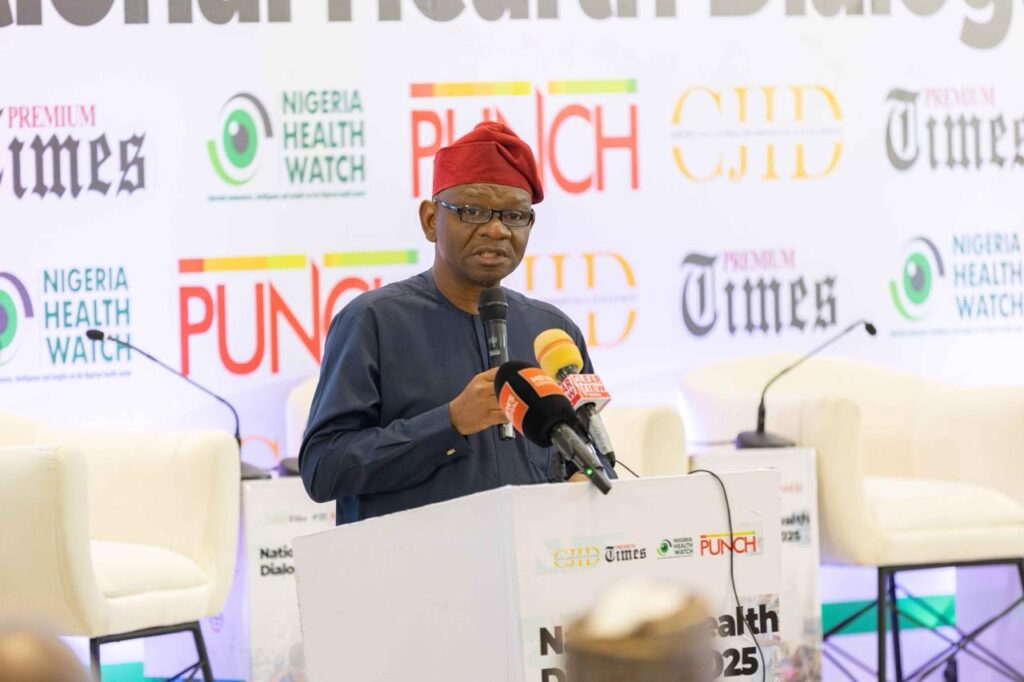
Dr Muyiwa Aina Speaking at the CJID 2025 Nat. Health Dialogue

The DG of NACA,Temitope Ilori (Dr), speaking at the National Health Dialogue
The Executive Director, CJID, Babatunde Akintunde, also stated “It is a lot more of agenda for us, maybe because as a watchdog institution, we need to know how much has been done that we haven’t captured before or how do we even verify what they said they have done, and then, how do we then extract commitment for what they would do in the next couple of months, so that by this time next year we would be reviewing what has changed. This is bringing policy conversations of the pitch of the newspapers to a convergence where the media, civil society organisations, private sectors, government, and international community come together to solve health problems and for us it’s exciting and also very consequential.”
Reforms with Measurable Impact: Government’s Renewed Hope Agenda
The keynote address by Dr Muyiwa Aina, Executive Director of NPHCDA, underscored the critical role of evidence, innovation, and financing in health reform. He highlighted the Health Sector Renewal Investment Initiative (NHSRII), championed by the government of President Bola Ahmed Tinubu. He detailed the government’s strategic approach to primary healthcare (PHC), citing improvements in staffing, infrastructure, and digital systems across more than 30,000 facilities nationwide.
“Evidence ensures we innovate for the right problems. Innovation brings efficiency, speed, and scale. And money underlies all interventions,” Aina explained.
Aina also highlighted the Maternal and Newborn Mortality Reduction Innovation Initiative (MAMII), which tracks pregnant women through community-based and digital interventions to ensure timely antenatal care and safe deliveries. He revealed that nearly half a million women are currently enrolled, with 41,193 followed through to delivery, noting a 22.5% increase in ANC attendance in just one quarter and 47 million quarterly PHC service contacts, double from two years ago. He emphasised that trust, not just infrastructure, is crucial for sustained engagement with the health system.
Aina concluded, “We are no longer working in a vacuum. The dialogue between the media, states, and federal agencies is building a system that is accountable, innovative, and truly responsive to the needs of Nigerians. The progress we are seeing is real, and together, we will continue to move forward.”
The World Health Organisation (WHO), Country Director in Nigeria, Dr Pavel Ursu, who was ably represented by Omotayo Hamzat, Supply Chain Management Officer, WHO, said, “Gender equality must be central to system-wide transformation. Harmful gender norms continue to reinforce inequality, and confronting these norms is necessary for achieving the United Nations Sustainable Development Goal 5.”
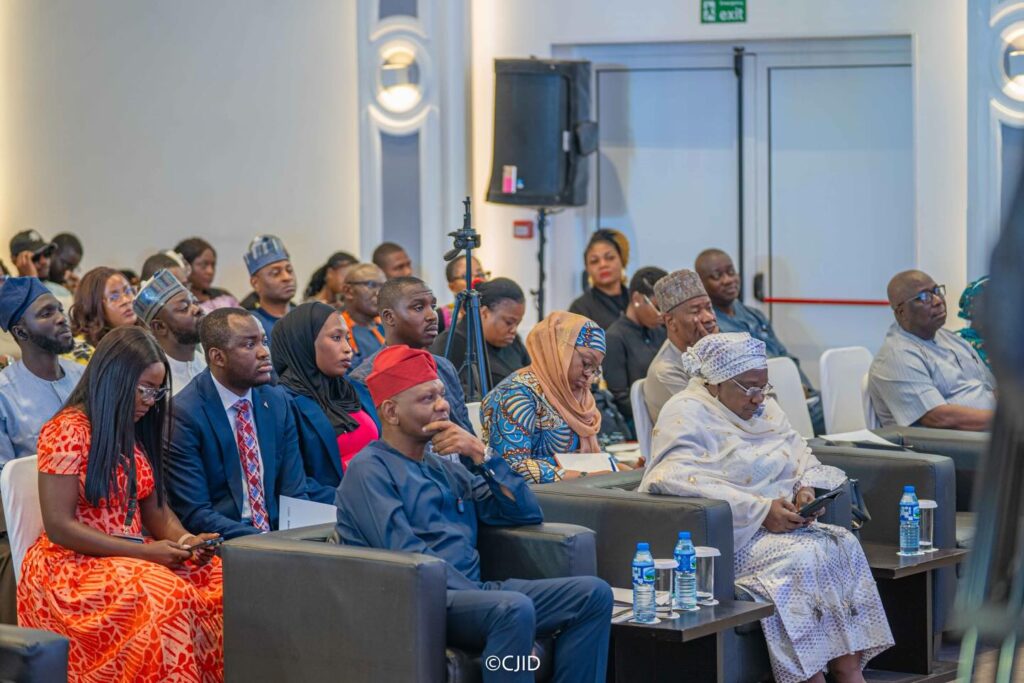
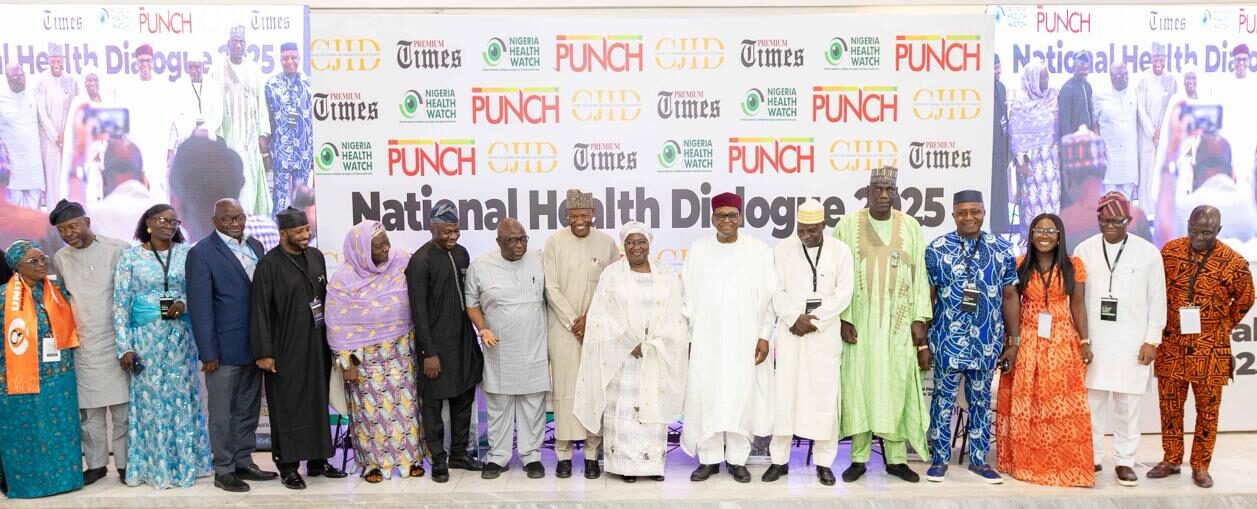
Some Participants at the 2025 National Health Dialogue
Goodwill Messages: Journalism at the Heart of Health
Speakers reinforced the indispensable role of the media in health system accountability, as the message of Temitope Ilori (Dr), Director-General, the National Agency for the Control of AIDS (NACA), remains an important reminder of the critical link between journalism and public health, and how accurate reporting informs the public, shapes health behaviours, and guides policy decisions.
She said, “The intersection of journalism, public health, and national development cannot be overstated. Quality health journalism informs policy, shapes public opinion, holds institutions accountable, and ultimately saves lives. So, I’m happy that the journalists have deemed it fit to put together this programme to discuss these.”
Similarly, the Country Director in Nigeria, Pathfinder International, Dr Amina Aminu, lauded the multi-stakeholder nature of the Dialogue.
She stated, “It’s not only a dialogue for the media, it is a dialogue that engages the media, the leadership of health sectors in the states, because I know that I have met with the commissioners of health and some of the executive secretaries of Primary Health care agencies or boards and also development partners are all here. And the most important thing is also the overall leader of the health sector who is the minister of health and coordinating Minister of Health that is here with us, so first of all that is an important strategy to have all of us in one room to discuss from different perspectives about the health sector, why we need to really ramp up interventions and why we need to hold ourselves accountable.”
“It’s not only a dialogue for the media; it engages health leadership, development partners, and government actors to drive interventions and accountability,” she said.
The Senior Communications Officer, Gates Foundation, Fatima Abubakar-Alkali, said, “Evidence should be the compass that guides every health decision, and the media plays an essential role in uncovering and presenting that evidence.”
The Managing Director, Nigeria Health Watch, Vivianne Ihekweazu noted, “This year’s theme, evidence, innovation, and financing, is especially important given the rapidly changing global financial landscape being faced.”
The Deputy Editor, Saturday and Sunday PUNCH, Tessy Igomu, who ably represented the Managing Director/Editor-in-Chief of PUNCH newspapers, Mr Adeyeye Joseph, said, “Our attendance at this event can be linked to that objective. Healthwise’s broader objectives are closely aligned with this summit’s objectives. At a time when Nigeria continues to grapple with limited access to quality healthcare, underfunded health institutions, brain drain, insecurity-induced health disruptions, and widening inequalities, a platform like the National Health Dialogue is essential for policymakers, journalists, researchers, civil society actors, health professionals, and the public to reflect, debate, innovate, and chart actionable steps toward a healthier nation. We reaffirm PUNCH’s dedication to being a strong, independent voice in Nigeria’s health sector, telling the stories that matter, spotlighting systemic failures, humanising statistics, and pushing for reforms that will ensure no Nigerian is left behind.”
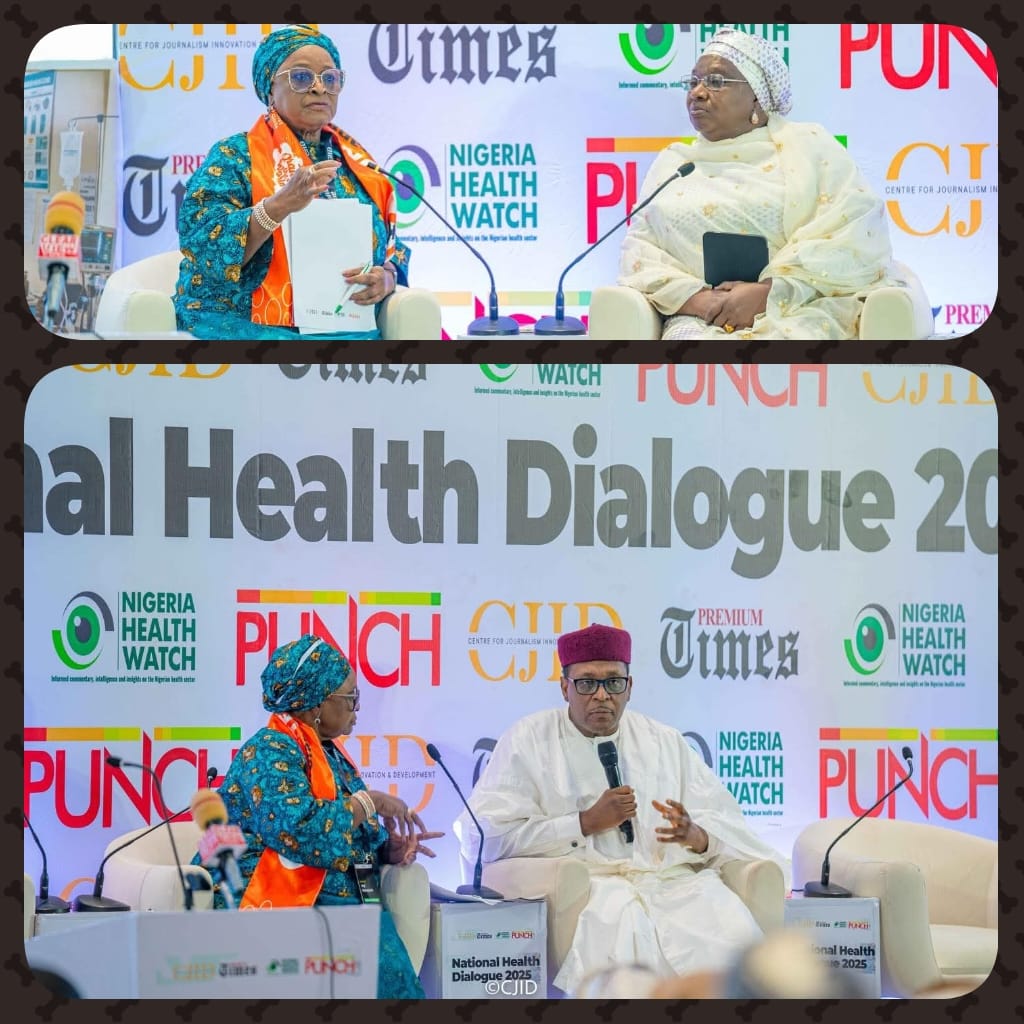
Fireside Sessions with the Hon. Minister of Health and Social Welfare, Prof. Muhammad Ali Pate and the Deputy Governor of Kaduna State, Dr Hadiza Balarebe during the CJID’s 2025 National Health Dialogue
Fireside Conversations: From Policy to Practice
A fireside conversation with Prof. Muhammad Ali Pate, Minister of Health and Coordinating Minister of Health and Social Welfare, moderated by Moji Makanjuola, ISMPH, highlighted Nigeria’s Renewed Hope Agenda for accessible, affordable, and quality healthcare. Prof. Pate stressed evidence-based financing for PHCs, hospitals, and cross-sectoral interventions such as sanitation, housing, and nutrition.
Whilst responding to the Sundiata Post on the need to assure Nigerians with a promise on behalf of the Government on where the health sector would be by 27 November 2026, and how much of the budgetary allocation for the health sector should be expected in 2026?
He said, “I believe that by next year, we will have an additional 5,000 receiving BHCPF in Primary healthcare centres if all goes well in reassessing the flow of funds, and it will be verified. In terms of federal allocation for the health sector, since it is in the hands of other sectors beyond me and in the hands of the National Assembly, my hope and prayer are that we would get more, closer to 6 per cent than away from 6 per cent…which is the highest ever federal allocation in the health sector. It was less than 4 per cent, and we’ve moved it upwards…We are working, and I know the President is intentional in increasing that. We would advocate with the Legislatures…So, I do think when we meet next year, the allocation will be closer to 6 per cent than away from it, away from 5 per cent. On the side of the media personnel, your voice matters. Raising your voice and coming out clearly, not only for federal but also for the state governors, look at where they are and point to them to also increase and support this direction. That’s two for 1 promise.”
In another fireside session, Dr Hadiza Sabuwa Balarabe, Deputy Governor of Kaduna State, shared the state’s progress in primary and emergency healthcare, innovative financing, referral systems, and promoting women’s participation in health policymaking.
She further discussed how the state has strengthened primary and emergency health services, upgraded facilities, enhanced referral systems to ensure timely care for mothers and children, implemented innovative financing strategies for primary healthcare, and fostered women’s participation in the legislature to ensure health policies and programs are inclusive and responsive to the needs of women and children.
Investigative Spotlight: How Journalism Fuels Health Accountability – Featuring Nigeria Health Watch and Punch Healthwise
Angela Onwuzoo, Editor, Punch Healthwise, demonstrated how investigative reporting sparks action, citing stories that influenced policy across maternal health, water and sanitation, adolescent health, social protection and other sectors. She emphasised the alignment of health journalism with SDGs 1–6 and 13, illustrating how evidence-based storytelling amplifies citizen engagement, reinforcing the media’s relevance in national development.
Sheriff Gbadamosi, Manager, Advocacy and Community Engagement, spoke on “Subnational and Community Engagement: Strengthening Citizen Voices and Accountability in Primary Healthcare across Nigeria.”
He highlighted the work of Nigeria Health Watch and spoke on the importance of empowering communities to actively participate in decisions shaping primary healthcare delivery. By raising awareness, fostering dialogue, and supporting citizen engagement, the initiative aims to ensure that local voices influence the planning, implementation, and accountability of PHC services nationwide.
The Panel Sessions: Financing Health in a Post-Aid Era
The first panel session, titled “The Real Cost of Primary Healthcare: Examining PHC Delivery at the Sub-National Level,” moderated by Tolulope Adeleru-Balogun (News Central TV), explored referral systems, evidence-based solutions, and citizen engagement campaigns such as #KnowYourPHC.
Panellists (Dr Nusirat Elelu, Executive Secretary, Kwara State Primary Health Care Development Agency (SPHCDA), Nike Adebowale Tambe, Health Editor, Premium Times and Dr Ibrahim Wada, Chief Executive Officer (CEO), Nisa Premier Hospital) discussed the importance of understanding referral pathways across levels of care, going into communities to see how people are truly affected, and gathering practical, evidence-based solutions.
They highlighted initiatives such as follow-up reporting to track government response, publishing investigative reports, and encouraging citizen engagement through campaigns like #KnowYourPHC. The discussion also stressed the need for quality health care environments, responsiveness that inspires trust and encourages patients to return for care.
Dr Ibrahim Wada stressed that access to quality health care cannot be overemphasised, especially once the sector has taken care of its management. According to him, there must be collective responsibility.
The final panel session of the day, “Mobilising Finance for Health in a Post-Aid Era,” moderated by Eniitan Tejuoso of the Presidential Initiative for Unlocking the Healthcare Value Chain (PVAC), explored strategies for sustainable health financing in Nigeria.
Panelists (Dr Charles Olusegun Doherty, General Manager, Ekiti State Health Insurance Scheme, Dr Uchenna Igbokwe, CEO, Solina Centre, Dr Amina Aminu Dorayi, Senior Country Director, Pathfinder International, and Dr Biobele Davidson, Strengthening Health System Lead, BudgIT), emphasised that achieving lasting impact requires more than donor funding, organisations, governments, and communities all have a role to play in ensuring resources are used effectively.
Discussions highlighted the importance of stronger domestic funding, transparent resource use, data-driven planning, and community-led health promotion. Experts also pointed to policy shifts such as expanding mandatory insurance, encouraging private-sector investment, leveraging technology for remote service delivery, and building on Nigeria’s skilled health workforce to achieve better health outcomes.
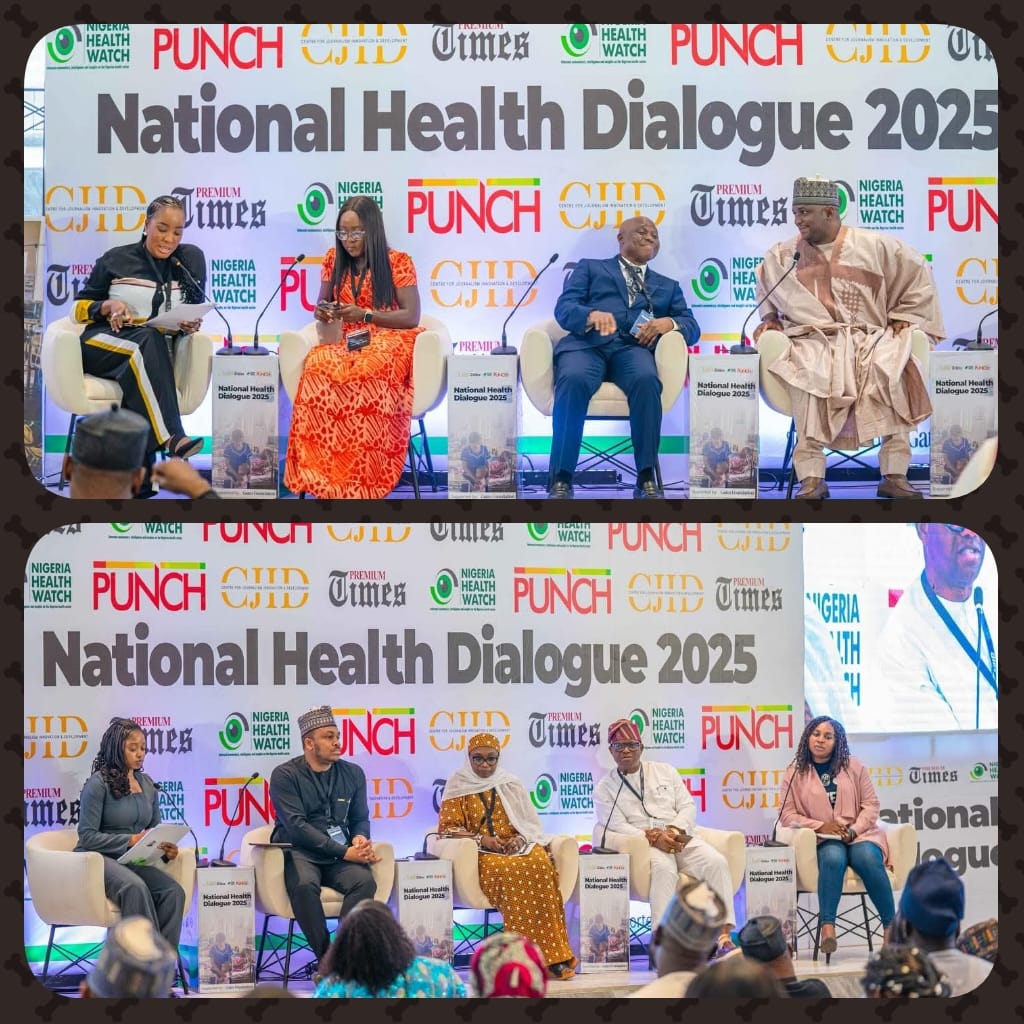
Panel Sessions at the CJID’s 2025 National Health Dialogue
Health Financing Priorities for 2026: State-Level Progress and Commitments
State representatives from Kaduna, Katsina, Abia, Akwa Ibom and Jigawa shared ongoing investments in facilities, staffing, training, malaria control, and inclusive policies, highlighting practical steps to improve health outcomes at the community level.
Hon. Musa Adamu Funtua, Katsina State Commissioner for Health, spoke about efforts to boost the quality and reach of healthcare delivery. He emphasised the importance of ensuring that health investments directly benefit communities and respond to local needs.
Hon. Funtua also highlighted efforts to improve primary healthcare across the state, including upgrading facilities and addressing staffing gaps. These initiatives aim to expand access to essential services and enhance the overall quality of healthcare for residents of Katsina.
Dr Ifeyinwa Blossom Uma-Kalu, Permanent Secretary of the Abia State Ministry of Health, spoke on the state’s measures to improve healthcare services.
She highlighted the state’s efforts to enhance primary health centres across Abia, focusing on equipping them with essential medical supplies and ensuring they are adequately staffed.
She noted that these upgrades aim to expand access to quality care at the community level and strengthen routine service delivery.
Moses Essien, Chairman of the Akwa Ibom State House of Assembly Committee on Health, presented the state’s ongoing efforts to improve its health system.
He explained that Akwa Ibom is increasing its financial commitment to the health sector and broadening the reach of essential health services across local government areas. These steps, he noted, are aimed at strengthening service delivery and ensuring that healthcare is more accessible to communities throughout the state.
Hon. Muhammad Kainuwa, Jigawa State Commissioner for Health, outlined the state’s ongoing priorities for strengthening its health system.
He shared that Jigawa has supported medical education by sponsoring students, many of them women, to study medicine. He also noted ongoing upgrades to health infrastructure and a strong focus on improving service quality across the state.
Hon. Kainuwa highlighted the state’s malaria elimination efforts, describing them as a major component of Jigawa’s public health strategy. He added that the state is deepening investments in health workers, training, and facility improvements, while introducing measures to enhance accountability and ensure that services are more responsive to community needs.
Innovation in Action: Homegrown Solutions to Close Health Gaps
Local innovators demonstrated technology-driven health solutions:
- DRO Health: Telemedicine consultations connecting users to licensed doctors.
- HelpMum: Maternal and child health support and tracking, including vaccination reminders.
- Dobic Health: Tools for clinical decision-making and patient engagement.
These platforms illustrate how locally developed technology can bridge the gaps in access and enhance the efficiency and accountability of health services in general.
Key Insights: Charting a Unified Path for Nigeria’s Health Future
The 2025 National Health Dialogue highlighted critical priorities shaping Nigeria’s health sector: evidence-driven reforms as the backbone of strategy; innovative and digital solutions enhancing access and efficiency; sustainable, accountable financing ensuring lasting impact; active media and civil society participation promoting transparency and public trust; and state-led initiatives aligned with national goals to guarantee equitable, quality care.
As participants departed, one message resonated clearly: building a healthier Nigeria demands coordinated action across sectors, practical innovations, and steadfast commitment from government, communities, and the media.
The Dialogue closed on a high note, with the Executive Director, CJID, Babatunde Akintunde, expressing heartfelt appreciation to participants, collaborators, and the CJID team for contributing to a successful, impactful conversation.