Transport Sector Reforms Take Centre Stage as ICPC, FRSC Strengthen Collaboration

By Vivian Daniel
The Chairman of the Independent Corrupt Practices and Other Related Offences Commission (ICPC), Musa Adamu Aliyu (PhD), has reiterated the Commission’s unwavering commitment to strengthening corruption-prevention structures in Nigeria’s transportation sector.
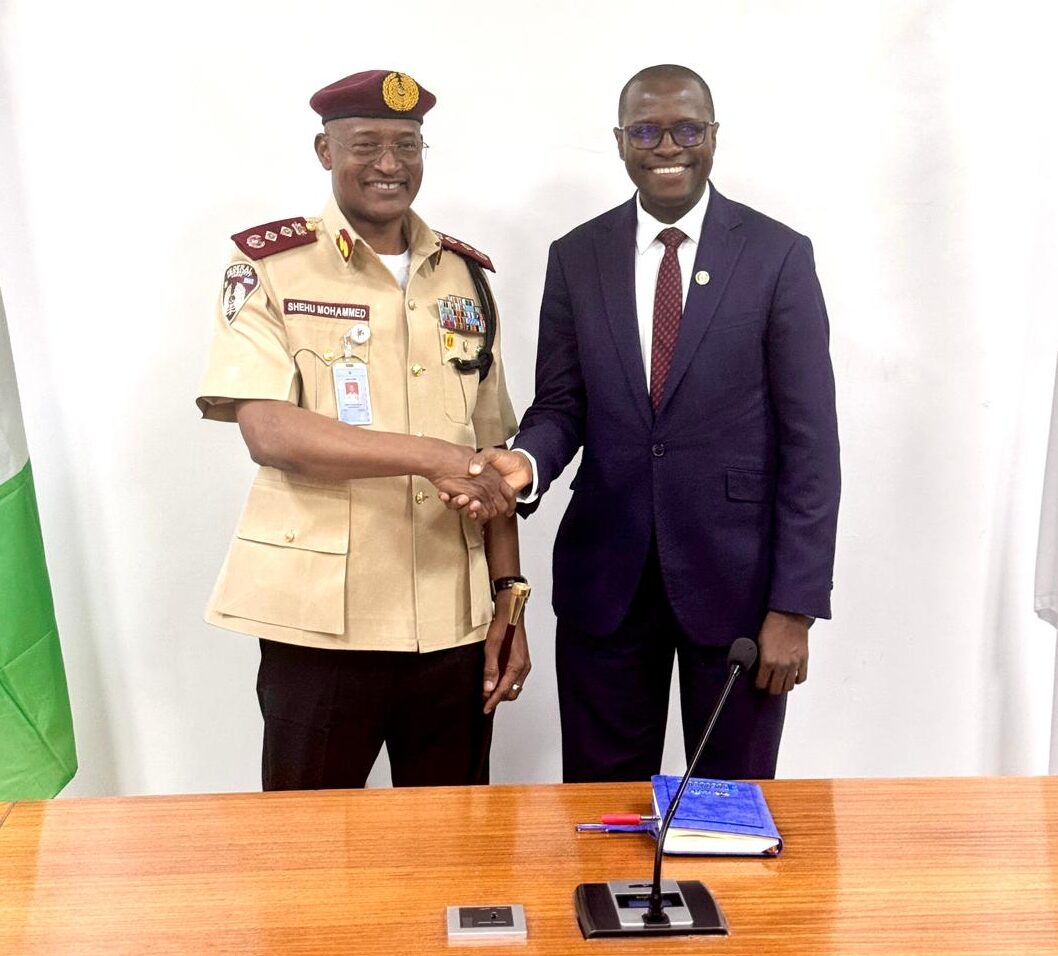
He made this known on Tuesday, 18 November 2025, during a courtesy visit by the Corps Marshal of the Federal Road Safety Corps (FRSC), Shehu Mohammed (mni), to the ICPC headquarters in Abuja.
Adamu Aliyu described the transportation sector as a critical pillar of national development, security, and economic stability, noting that criminal activities, extending from fraud to violent crimes, often involve the misuse of vehicles and mobility systems. He stressed the need for deeper collaboration among agencies to safeguard the sector from corruption and inefficiency.
According to him, transportation is “a pivotal component of national development and public safety,” and because vehicles are frequently used in the perpetration of crimes, the system must be reinforced to ensure accountability and promote safer roads.
The ICPC Chairman emphasised that strengthening the sector would require coordinated efforts with the FRSC and other law-enforcement institutions, adding that such synergy would enhance public confidence and contribute to a more efficient national economy.
Aliyu commended the FRSC for its innovative strides, particularly the recently introduced Contactless Driver’s License Processing System, which eliminates unnecessary human contact and significantly reduces the avenues for corrupt practices. He also lauded the rollout of the Premium Driver’s License Service, which has improved service timelines and enhanced public trust in the licensing process.
The ICPC Chairman further reiterated the Commission’s readiness to support the strengthening of the FRSC’s Anti-Corruption and Transparency Unit (ACTU). He maintained that strong internal controls remain essential in curbing unethical conduct within public institutions.
“Internal controls and early intervention are vital in curbing unethical practices across public institutions,” he said.
He added that personnel of the Commission, including official drivers, would benefit from FRSC-led trainings on safe driving standards, road usage, and general road safety practices.
Aliyu subsequently directed relevant departments within the Commission to work closely with the FRSC on joint sensitisation initiatives that would promote safety, integrity, and transparent service delivery.
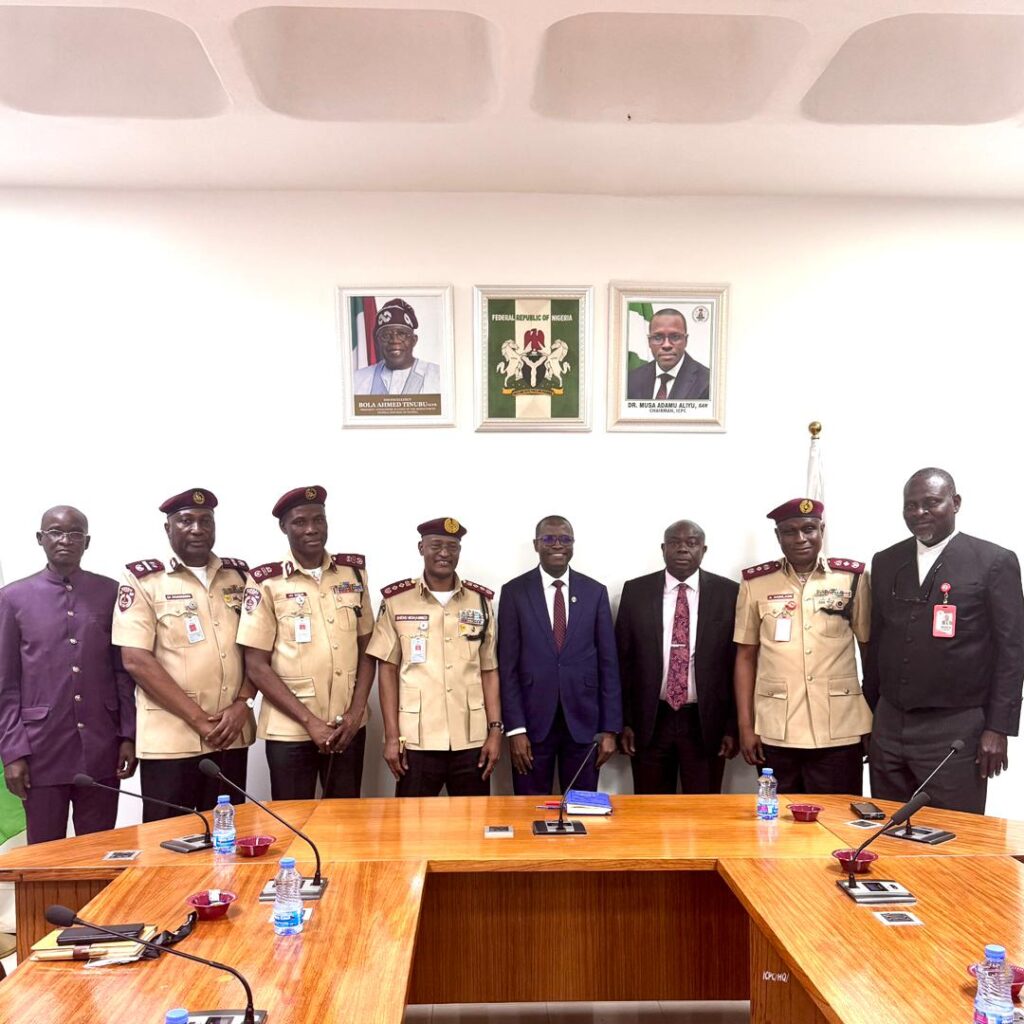
Photograph of the ICPC and FRSC Crew
Earlier, the Corps Marshal of the FRSC, during his remarks, Shehu Mohammed, described the FRSC as the nation’s premier agency for regulating road use and ensuring the safety of motorists and passengers. He highlighted a series of ongoing reforms dedicated to improving service delivery and reducing corruption vulnerabilities.
Mohammed disclosed that the Corps now has the capacity to process up to 25,000 driver’s licenses daily, supported by enhanced data-protection mechanisms aimed at preventing identity-related fraud. He explained that the FRSC’s newly introduced Contactless License Renewal Platform was designed not only to speed up processing times but also to drastically reduce opportunities for corrupt interactions by limiting physical contact between applicants and officials.
He further outlined other key innovations recently implemented by the Corps, including the introduction of Standard and Premium Driver’s License Options, an upgraded National Vehicle Identification System (NVIS) that allows for faster and more accurate vehicle information retrieval, and an enhanced Passenger Manifest System that strengthens commuter safety and improves emergency-response coordination.
In his closing remarks, the Secretary to the Commission, Clifford Oparaodu, DSSRS, commended the FRSC for its transformative reforms and expressed optimism that the partnership between both agencies would continue to advance transparency and integrity in Nigeria’s transport sector. He noted that sustained collaboration would promote governance systems that are efficient, corruption-resistant, and responsive to the needs of the Nigerian public.
The courtesy visit, which brought together senior officials of both organisations, underscored the shared commitment of the ICPC and FRSC to strengthening institutional reforms, enhancing public trust, and fostering safer and more accountable transport systems across the country.